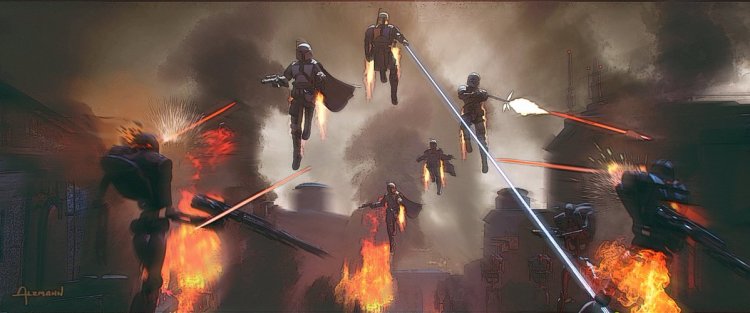
Harry Potter and Deathly Hallows Chapters 1 & 2

We have come to the final book in our nightly bedtime Harry Potter reading to our 2yo. Generally I love this book and think it ties things up nicely. However, there are also many instances in which JKR’s retcons fall pretty flat – get ready, because I have thoughts! Let’s start with the beginning, though.

The leader of my Harry Potter book club, Becca, hit the nail on the head with a comment that Voldy criticizing Bella feels like someone kicking a puppy. Well that’s just it, isn’t it? Animal cruelty is a trait often associated with psychopaths. Moreover, and I didn’t realize this until looking into it just now, “IATC (Intentional Animal Torture and Cruelty) is sometimes used to coerce, control and intimidate women and/or children to be silent about domestic abuse within the home. “

So my read is that Voldy lashes out A. because he is a cruel psychopath, B. to keep Bella under his heel, and C. to help control his other sycophants.

Harry Potter and the Half Blood Prince Film Review

This is one of my least favorite Harry Potter films. I am generally less of a fan of the David Yates films, which seem more plot-paint-by-numbers and lose much of the magical whimsy that make the books and early films so fantastic. This movie is probably the greatest offender because it leans so hard into the feeling of foreboding it is trying to create; it just makes it not very pleasant to watch. Even so, there is still a lot to love in this movie too, so here is my breakdown:

The Good

  • This film does a good job creating an ominous, foreboding mood, including some genuinely terrifying moments like Katie Bell’s curse. Part of what makes the atmosphere so scary is that, for the first time, they really flesh out scenes in the Muggle world, like London and Spinner’s End. That makes the threats no longer feel contained to the fantastical wizarding world.
  • Harry is really charming. “Actually, sir, after all the years, I just sort of go with it.” “But I am the chosen one.” The full Felix Felicis scene (including my favorite line of the film: “And the pincers – click, click, click”) – Harry’s comedic time is just spot on.
  • Slughorn is affable and likeable, also with excellent comedic timing: “I’d have liked the set.” “All hands on deck, Granger!” “Just in time for dessert – that is, if Belby’s left you any!”
  • I generally find Snape in the Yates movies to be not nearly as compelling as he is in the earlier films. This film is no exception, but he does have a couple of outstanding moments: “Bella, we musn’t touch what isn’t ours” in Spinner’s End and delivering Dumbledore’s message at Slughorn’s party. RIP, Alan Rickman; you were one of a kind!
  • Helena Bonham Carter once again chews all the scenery as Bellatrix.
  • Evana Lynch is endearing as Luna: “I sleepwalk you see; it’s why I wear shoes to bed.”
  • I’m not a huge Rupert Grint fan, but he does really well as Ron in the love potion sequence.
  • The inky aesthetic of all the pensieve memories is really cool.
  • This is totally subjective, but I love that they used the Cliffs of Moher as the cave entrance. We were very impressed by those cliffs during our trip to Ireland and anything that links Harry Potter to The Princess Bride is cool in my book!

The Bad

  • The entire film is so dark and washed out that it’s kind of depressing to watch. It’s all grays and greens, peaking in the cave (which features geology reminiscent of Superman’s fortress of solitude for some reason??), which is basically black and white. I know they were trying to support the sense of dark foreboding with the cinematography, but they went way too far and it actually feels kind of amateurish – like a film school student applying a blanket filter to every scene indiscriminately.
  • As with the previous movie, this one just doesn’t feel very fantastical. The kids wear normal attire most of the time, the Hogwarts Express looks like a modern train, etc. The film is so bad at conveying a sense of magic and wonder that it tries to do it explicitly by having Harry act awed by Dumbledore’s simple act of using a cleaning spell at Slughorn’s hideout – which falls incredibly flat.
  • The teen romance plots don’t work for me at all because basically none of the paired actors have any chemistry. The hug at the beginning between Ginny and Harry is super awkward as are their interactions at Christmas. It feels like they were given direction to “be awkward” but no guidance on how to pull it off effectively. Ron and Hermione aren’t much better (“Hermione’s got nice skin, don’t you think?”) and Lavender is way over the top. As opposed to Goblet of Fire, this film feels like it was written by someone who was never a teenager in love. They were written by the same screen writer, though, so I blame Yates.
  • The plot additions that did not come from the book really don’t work for me either. The subway scene with Harry and the waitress feels like fanfic and a contrived way to introduce Dumbledore dramatically. Similarly the Christmas attack on the Burrow makes no sense. Both of these seem to be continuations of Yates’s preference for nonsensical setpieces over well-developed characters and plots.
  • This film features lots of exposition that’s just . . . kind of . . . goofy. Early on, Harry exposits about apparition in a way that is so obviously exposition it practically breaks the fourth wall – and then doesn’t really serve any purpose for the rest of the film. The protagonist trio talk about “Dumbledore maybe getting too old” mere weeks after he epically defeated Voldemort. Cormac McLaggen is set up to be this obnoxious creeper, but he’s portrayed by a super handsome / charming model. Slughorn says Harry’s Draught of the Living Death is so perfect that “one drop would kill us all,” but that’s a sleeping potion. McLaggen asks Harry to introduce him to “his friend, Granger” despite having shared a House with her (and just a few dozen others) for the last five years. Neville is randomly serving drinks at Slughorn’s party. After their breakup, Ron is the one making it snow even though Lavender is the angry one – and Lavender is sitting at some other House’s table for some reason. None of these things is particularly egregious; they just demonstrate a carelessness in the filmmaking that wasn’t there in earlier films.
  • I have supported over and over again the argument that Harry Potter is a collection of mystery stories dressed up as fantasy. In this film, though, there is no mystery. In the early Borgin and Burke scene, Draco is shown going right for the vanishing cabinet. Then Draco is shown in the Room of Requirement with an identical vanishing cabinet. Although the bird and apple are very poor, confusing devices to show Draco’s progress in mending the cabinet, his work is very telegraphed the entire way.
  • Dumbledore has some really awkward, weird, and wholly unnecessary dialogue. “I notice you spend a lot of time with Miss Granger.” “Harry, you need a shave, my friend.” WTF? These come out of nowhere and are completely incongruous with anything relevant to the plot or characters.
  • This is related to the poor job this film does more broadly of characterizing the relationship between Dumbledore and Harry. I love in the book how Dumbledore is gently disappointed by Harry’s lack of effort in securing Slughorn’s memory and how abashed Harry is about it – but there’s none of that dynamic here.
  • Speaking of Slughorn, while I enjoy Jim Broadbent’s portrayal here, it is wildly out of character from the book version. This Slughorn is unbelievable as a Slytherin – much more of a Hufflepuff.
  • The young Tom Riddle of this film isn’t nearly as creepy or commanding / threatening as the character in the book.

Again, there is a lot to like in this film and I will never skip it during a marathon. There is plenty of “meh” too, though, and I rarely find myself specifically in the mood for this one – which I do for most of the others.

Entrepreneurial Mentorship

In the call to action of my TED talk on the Entrepreneur’s Journey, I exhorted seasoned entrepreneurs to answer the call to service by mentoring less-experienced entrepreneurs.

Because entrepreneurship requires such different skills, heuristics, and calculi than other, much more common business arenas, having an experienced guide is invaluable to first-time entrepreneurs and can be the difference between success and failure. Furthermore, most successful entrepreneurs have themselves been the beneficiaries of mentorship, so I would go even further to argue that it is a moral obligation to pay it forward to those in need.

In my own life, I have endeavored to provide mentorship to aspiring entrepreneurs in several arenas:

  • Employees – In my career I have had the honor to serve hundreds of employees as their leader. While it can be tempting in a fast-moving startup to focus just on what those employees can produce, I see my role first and foremost as helping them develop and grow. I am enormously proud that dozens of my former employees have gone on to found ventures of their own, creating billions of USD of value.
  • Academia – Wherever I have lived (and in some places I haven’t!) I have forged connections with universities to mentor entrepreneurial students, teach entrepreneurship courses, and advise startup efforts from students, faculty, and staff. There are few things more rewarding than hearing from former students whose class projects have taken off!

    My deepest relationship is with Rice, where I served as Entrepreneur In Residence for the Rice Center for Engineering Leadership and am now on the Board of the Liu Idea Lab for Innovation and Entrepreneurship. I mentor at my other alma maters, TJHSST and IMD, as well. During my years in Chapel Hill, I mentored at UNC – especially within the Adams Apprenticeship – Duke, and Elon. For years I have mentored remotely at the University of Wyoming’s burgeoning entrepreneurship program, but, now that I have moved to Colorado, I may be close enough to start participating in person after COVID!
  • Accelerators – I have spent a lot of time participating in accelerator programs to help participants get off the ground. The Surge Accelerator, Groundwork Labs, 1789 Venture Lab, Launch Chapel Hill, The Ion Smart & Resilient Cities Accelerator and – of course – OwlSpark are several accelerators where I have hung my hat and where I have built lifelong relationships with hundreds of entrepreneurs.
  • Events – Startup Weekend, 3 Day Startup, and the Cleanweb Hackathon are short sprints to help entrepreneurs find each other and work on meaningful startup projects together – usually over the course of a weekend. I’m not aware of any startups launched during the events where I participated as a mentor that have taken off, but I have made some great relationships and hopefully helped prepare some entrepreneurship neophytes gain the confidence to take the plunge later.

Mentorship has been incredibly rewarding for me and indeed my mentees have gone on to create orders of magnitude more impact than I have alone. However, there are only so many hours in the day, so how can an entrepreneurial mentor optimize their time and impact? A few practices I follow:

  • Take all meetings: this is counter to the methodology of many sought-after people, who prefer to gatekeep their time and connections, which I totally get. I have benefitted so greatly, though, from people taking my meeting requests, that I can’t help but pay that good will and karma forward.

    Rather than optimizing for # of meetings, instead I optimize for time and quality of those meetings. If I can’t help them, I’m clear about it early on. However, I have often found that I may actually be able to help after learning more when it wouldn’t have seemed so from the initial meeting request.

    Furthermore, I have found that sometimes years later I am in a position to help. For example, there was a student startup I mentored years ago. They were direct-to-consumer and in an industry I didn’t know well. I gave them some generic advice that didn’t seem very helpful to me. Apparently they thought it was very helpful, though, because the reached back out to me years later, having achieved so much success that they were being courted for acquisition. They then needed advice on negotiating acquisition terms, which is an area where I could provide very pointed value.

    Serendipity is so important to entrepreneurs and it is impossible for us to know a priori what will be helpful to them or how – sometimes a meeting with a more experienced entrepreneur provides less tangible benefit, like confidence-building. I also wonder if, when we act as gatekeepers, we introduce biases in advice and connection-making that result in unequal access.
  • Focus on mission-aligned entrepreneurs: Time is at a premium and life is short, so I do focus my time on entrepreneurs working to transition the world to a sustainable, prosperous, and equitable energy economy. If you are working on a smoothie bar, I will still take the meeting, but will work to connect you quickly with someone who is a more appropriate fit.
  • Focus on entrepreneurs with the greatest need: I try to focus my time on entrepreneurs who need the most help. The venture ecosystem is deeply inequitable and, if I can help level the playing field even just a little, that is time well spent.

    I was mentoring a team of Black founders who were having a hard time fundraising. They asked me to codeswitch their intro email/deck to “my” language and suddenly that had several VC suitors. To be clear, forcing historically underrepresented entrepreneurs to adhere to norms set by the mostly white, mostly male holders of power in venture is not the solution – but this instance was a stark reminder of the systemic barriers faced by entrepreneurs who don’t look and sound like me.

    If you are a rich white cis male from a top university, I will still take the meeting, but I will focus much more of my time working with entrepreneurs who have systemic winds in their faces rather than at their backs.
  • Get out of the way: because my time is limited and because I am swamped with a million other things, often the most productive action I can take on behalf of entrepreneurs is to get out of the critical path by making an introduction or pointing them to a targeted resource. If they’re waiting on me for a detailed contribution, they will often be waiting a long time, and waiting is counterproductive for entrepreneurs.
  • Interrogate, don’t prescribe: I try never to tell entrepreneurs what to do. Firstly entrepreneurship research is full of evidence that so-called “experts” don’t know the right answer any better than neophytes. Secondly, new entrepreneurs gain more in the long run from forging neural pathways to develop answers themselves rather than being told what to do. As such, I try to ask probing questions and share relevant experiences. No one can walk the entrepreneur’s journey for them; all we can do is share context to help inform their path.

What do you think? This is – and will always be – a work in progress. How do you think about mentoring entrepreneurs? What key learnings from your own experience can you share?

The Mandalorian Review

TL;DR The Mandalorian is an OK show with high production value and occasional flashes of brilliance, occasional flashes of inexplicably low quality, but mostly mediocrity with a shiny veneer. It’s a fun romp of mindless fun, but doesn’t capture what makes Star Wars special.

I usually review media properties in three sections: The Good, The Bad, and The Ugly. Never has that felt so appropriate as with The Mandalorian, which is modeled very heavily on Westerns. WARNING: SPOILERS THERE BE BELOW!

The Good

  • The concept art shown at the end of each episode is amazing and it gives the impression that each episode is a comic book issue come to life.
  • The music is really well done; the main theme is captivating and it shows up in many different variations throughout the show.
  • Pedro Pascal does a really admirable job acting with his face covered 99% of the time.
  • The show really shines in the episodes that expand on the Mandalorian lore and bring the lone protagonist into the team sport that is Mandalorian combat. This is the way.
  • Although the tone of the show is Western, it isn’t afraid to explore other genres like horror, which keeps things interesting.
  • The fight choreography is mostly pretty good.

The Bad

  • Good though the fight choreography may be, much of the action is just . . . dumb. Crack sniper bounty hunters leave their sniper nests from which they are picking off storm troopers with impunity to go engage much larger numbers in hand to hand combat. Mandalorians stop using the blasters that are working very well to show off gadgets that are much less useful in the situation. Etc., etc. None of it matters anyway because the protagonists are invincible and are never in any real danger. Great action, but this action feels more like contrived set pieces. It feels very Game of Thrones season 8 in its nonsensicalness.
  • It’s not just the why of the action that is nonsensical, but also the who. In literally 25% of the season 2 episodes, the big bad boss at the end is a . . . career administrator . . . who happens to be amazing at hand-to-hand combat. In episode 5, for example, the magistrate is so intimidated by Ashoka Tano that she hires the titular protagonist to go hunt her. Yet, when Ashoka Tano – who went toe-to-toe with Darth Vader in one of the only good episodes of Rebels – confronts her, the magistrate is able to hold her own down to the very end because . . . reasons.
  • The show leans heavily on plot twists, but they are all very clearly telegraphed. In the final episode, for example, the Mandalorian blows the dark troopers out the airlock, but literally our only previous exposure to them has been them flying around – so it is obvious that they will fly right back to the ship. The only thing not obvious is that it will take them so long to get back because . . . that’s what the plot timing requires. For a show trying so hard to surprise us, there were very few surprises.
  • The worst episodes in season 1 were filler side quests that didn’t result in the protagonist getting any closer to his goal; unfortunately there are many more episodes like that in season 2. Shows like Stranger Things have demonstrated that you can pack a lot of development and complexity into an eight-episode season so it’s hard to settle for less from one of the richest IP universes around.
  • Gina Carano is not a good actress. She mostly smirks a lot and delivers her lines flatly.
  • The Mandalorian takes his mask off too often. He’s supposed to keep it on dogmatically all the time but he took it off in 25% of Season 2’s episodes. That really cheapens the effect and lessens the emotional impact of the final scene.

The Ugly

  • As I have complained about before, self-indulgent cameos really piss me off and The Mandalorian showrunner Dave Filoni loves to insert himself every chance he gets.
  • Much worse, though, is that most of the characters in the show are woefully underdeveloped so, as a consequence, I just don’t care about them.

    Nowhere is this more obvious than in episode 5’s mercenary character played by Michael Biehn. Biehn winds up in a showdown against the Mandalorian at the end, but . . . why would we care? We don’t have any evidence that he’s even good at shooting or that he poses any sort of threat to our invincible protagonist.

    Compare this to Biehn’s Ringo in Tombstone, whom we have seen demonstrate not only exceptional gunhandling skills but also cold-blooded sociopathy so that there is real tension when he faces off against Doc Holliday in the climax. Episode 5 is beautiful but, like most episodes, is all style and no substance.
  • The fan service here is nauseating. Disney seems obsessed with exploring things like krayt dragons, stolen Death Star plans, and the Kessel Run that have only had oblique references in prior canon. Some things, though, are better left to the imagination and Disney is batting .000 so far on trying to realize them, often actually contradicting prior imaginings.

    Luke at the end was eye rolling – not just due to the bad CGI, but also due to his prior character arc culminating in his ascent to Jedidom by throwing away his light saber. Having him tear through a bunch of anonymous droids is silly and boring – did we learn nothing from the prequel trilogy?

    Boba Fett is the most egregious offender here, magically being brought back to life – but what would you expect from Filoni, who also brought back Darth Maul from certain death. I’m sure there’s some goofy retcon explanation, but it’s all so lame it feels more like fan fiction than something produced by creative professionals with infinite budget. I would much rather see them creating rather than simply rehashing concluded characters and plots.

The Mandalorian isn’t a bad show, but it isn’t great either – which is too bad, because it has the potential to be great. It’s at its best when exploring and developing the mythology and teamwork of the Mandalorians and at its worst when mimicking Episode IX with mindless action and fan fiction. Some people love it (I find there to be a high correlation with people who loved Rogue One and Episode IX.), which is great for them; I’m always glad for more people to find new ways to connect with the Star Wars universe.

For me, though, this doesn’t really feel like Star Wars. Action and CGI not make Star Wars great. Star Wars has always been great because of its characters, which recent Disney efforts seem to have completely forgotten.

Third Derivative Launch: GreenBiz Covers Our Climatetech Accelerator Debut

Today is a big day. After nine months of building in stealth (well, stealth-ish), Third Derivative is officially launching to the world; our inaugural cohort of nearly 50 climatetech startups, nine corporate partners, and nine VC investor partners are all out in the open at last. Readers of my origin story and six month update have watched this rocket ship assemble on the launchpad; today we light the engines.

I was thrilled that Heather Clancy at GreenBiz chose to mark the occasion with a feature: Why corporate partners are essential for Third Derivative, a new climate-tech support network. Go read the whole thing; it captures our model better than most coverage I’ve seen. A few highlights and reflections from my conversation with her:

Why corporates, why now. Plenty of accelerators write checks and host demo days. Our thesis is that climatetech startups die in the valleys of death between R&D and commercial scale, and the fastest way to bridge those valleys is to bring corporates and investors into the process early. Our nine founding corporate partners (AT&T, BP Ventures, Berkshire Hathaway Energy, Engie, Envision Energy, FedEx, Microsoft, Shell, and Wells Fargo) collectively represent nearly $3 trillion in market cap, but, as I told Heather, “it doesn’t do any good for them to come in and just write a check.” They are rolling up their sleeves on mentorship, pilots, and technical evaluation; AT&T’s sustainability team was literally in the room helping us vet finalists.

The cohort. We received more than 600 applications from around the world for our first cohort, which we’ve dubbed Cohort 417, after the 417.1 ppm peak atmospheric CO2 concentration recorded this May. Naming our cohorts after the carbon clock keeps us honest about why we exist. More than two-thirds of the selected startups are led by founders who are women, veterans, or people of color. That didn’t happen by accident; as I said in the article, “we went out to meet them where they are.”

The investors. Nine VC firms spanning four continents, representing more than $2 billion in capital, are part of the launch network. Each startup receives a $100,000 convertible note, and our investor partners get unprecedented diligence access as they work alongside the startups, dramatically increasing investability by the time follow-on rounds come around.

The startups themselves are the real stars: ultra-low-cost thermal energy storage from Antora Energy, hyper-efficient air conditioning from Blue Frontier, industrial waste heat recovery from Kanin Energy, cobalt-free batteries from TexPower, and dozens more across the grid, transportation, buildings, industry, and agriculture.

My favorite line of my own from the piece: “We have a systems-level problem that we’re working on here. I think we can all agree that more is necessary.” Launching a global accelerator in the middle of a pandemic, with a team most of whom have never met in person, has been the entrepreneurial challenge of my career. The climate isn’t waiting, though, so neither can we. Today we celebrate (virtually, of course); tomorrow we get back to work bridging those valleys of death.

Ad astra, Cohort 417. 🚀


Why corporate partners are essential for Third Derivative, a new climate-tech support network

Berkshire Hathaway, Microsoft, Wells Fargo are among founding partners of the initiative, which received more than 600 applications for its first cohort.

By Heather Clancy November 30, 2020

Climate tech is more important than ever, but the systemic challenges entrepreneurs face in shepherding these solutions to commercial success is formidable. Most have incredibly long R&D lead times, while the systems that typically support startups cater to ones promising shorter-term payoffs.

That’s why earlier this year, clean economy nonprofits Rocky Mountain Institute — known for its thought leadership on climate change issues — and New Energy Nexus — with deep bottom-up resources for founders — combined forces to create a joint venture centered on finding and scaling climate-tech startups focused addressing climate change across the electric grid, transportation, buildings, manufacturing and agriculture.

Their mission: create a network of financial, technical and market development resources — including credible and powerful corporate connections — that gets these critically important solutions to commercial scale more quickly. The thesis: The most successful climate-tech startups will be those with early access to economic analysis, policy resources, financing and technical support.

This week, the venture, Third Derivative (D3), is launching with a portfolio of close to 50 startups (both early stage and those closer to commercial readiness) and the support of nine corporate partners and nine venture capital firms. D3 is particularly interested in accelerating solutions for “hard to abate sectors” where there aren’t currently good options for decarbonization, according to its website.

Of the 50-ish startup companies announced this week — dubbed “Cohort 417” (for the peak of 417.1 parts per million in atmospheric CO2 concentration recorded in May 2020 — more than two-thirds are led by founders who are women, veterans or people of color, said Third Derivative co-founder and CEO Bryan Hassin. “We went out to meet them where they are,” he said.

Both RMI and New Energy Nexus have committed “hundreds” of their market experts to supporting the venture with research, technical expertise and commercialization advice. The organization seeks to bridge knowledge and funding gaps at multiple phases of a startup’s life cycle — moving from basic research into a spinout; product development; demonstrations and market validation efforts; and commercial deployment.

RMI and New Energy Nexus are a powerful combo, but the corporate connections and venture resources make the initiative unique by providing that active perspective far earlier in the innovation process, Hassin said, pointing to his own past career as a climate-tech entrepreneur with a background in nanomaterials, off-grid solar energy and artificial intelligence. “We have a systems-level problem that we’re working on here,” he said. “I think we can all agree that more is necessary.”

Corporate support equals path to commercialization

D3 certainly packs a punch from day one, with nine corporations lined up as backers that have pledged to provide technical resources and financial support over the next three years. That initial group includes AT&T, BP Ventures, Berkshire Hathaway Energy, Engie, Envision Energy, FedEx, Microsoft, Shell and Wells Fargo. Together, these big companies represent almost $3 trillion in market capitalization, although the energy company valuations are particularly subject to fluctuation at this time.

These companies are “incredibly motivated and visionary,” Hassin said. They will play a hands-on role in startup mentorship and pilot projects, along with any other businesses that choose to join. But this isn’t just about money. “It doesn’t do any good for them to come in and just write a check,” Hassin said.

Nine venture firms — representing more than $2 billion in funding and four continents — also have stepped up to support Third Derivative: CRCM Ventures, Imperative Ventures, Skyview Ventures and Volo Earth Ventures from the U.S.; Chrysalix and Emerald Technology Partners from Europe; Factor[e] and Social Alpha from Africa/India; and Tsing Capital from China.

“It is incredibly hard for investors to source, vet and execute investments across the many varied climate solution sectors,” said Jan Van Dokkum, the former Kleiner Perkins Caufield and Byers partner who became chairman of Imperative in 2019, in a statement. “We see enormous value in Third Derivative applying RMI’s market knowledge and networks to cultivate a pipeline of game-changing climate-tech ventures validated by corporate partners. We are excited to make seed investments in those startups, and our ability to work with them over the duration of the program should dramatically increase their investability by the time they are ready for follow-on funding.”

AT&T, which has committed to carbon neutrality by 2035 for its own operations and is also interested in supporting technologies that help its customers work toward similar goals, was intrigued by the “rigor” that Third Derivative is using to evaluate potential portfolio companies and in allowing corporate partners to be part of that process. That was one reason it decided to shell out $900,000 for its first three years in the program, said John Schulz, director of sustainability integration for AT&T. The other motivator: the diversity of perspective the venture offers.

“These are big ambitious goals for us, and we feel the sense of urgency to find scalable solutions that can help us meet both of them,” Schulz said.

Aside from financial backing, AT&T is providing technical resources, especially those focused on how the various technologies being pioneered by D3 companies might be integrated with the internet of things — a major business development focus for the telecommunications company. “What are the connectivity solutions that could be the key to unlock success? That’s of particular interest,” Schulz said.

A wide range of solutions

D3 actually launched the application process for its first cohort in the spring and received more than 600 applications — many for what Schulz described as “mind-blowing” innovations.

The corporate partners were actively involved with evaluating and recommending selections among the 200 finalists, which represent advances in hardware and business models and, to a lesser extent, software. They also represent countries including India, Indonesia, China and Italy, although the initial selections are weighted to companies from North America. “We were a little overwhelmed by the enthusiasm,” Schulz said.

Some companies from the first cohort include:

  • Antora Energy: A Stanford-born effort (also backed by Cyclotron Road) working on ultra-low-cost energy storage that could have applications as wind and solar farms.
  • Blue Frontier: A startup supported by NREL, NYSERDA and others that is using saltwater energy-storage technology to create “hyper-efficient” air conditioners.
  • Frost Methane:  An offsets market being created around methane flaring activities
  • Kanin Energy: A venture focused on turning industrial waste heat into an emissions-free energy source.
  • Membrion: A materials company developing environmentally friendly filtration membranes.
  • SilviaTerra: A forest-mapping startup.
  • TexPower: A small team working on cobalt-free batteries.

Each D3 startup receives a $100,000 convertible note as well as the potential for $250 million in follow-on funding from the venture capital network that’s part of the program. Hassin said the mentorship process initially will last 16 months, but startups will be encouraged to remain connected. What’s more, companies will be added on an ongoing basis: applications will open up again in December. “We think there is value to working with a cohort for a while,” he said. 

Harry Potter and the Half Blood Prince Chapters 29 & 30

Another Harry Potter book finished – only one more and our 2yo will have “finished” them all!

Reflecting back on the end game of Half Blood Prince got me thinking about the burden of responsibility for products sold. I wonder where the Death Eaters procured their Peruvian Instant Darkness Powder. In my head canon I can’t really reconcile any of them patronizing the business of filthy blood traitors like the Weasleys, so I think it more likely that they owl-ordered it straight from Peru – or procured it through some other channel. Not that it matters – just an interesting thought exercise.

Also the scene in the hospital wing with newly mangled Bill Weasley always makes me cry, impeding my ability to keep up the outlandish French accent with which I always read Fleur. We should all be so lucky to A. know, B. be, or C. be loved by someone as fierce as Fleur. Although entirely unworthy of it, I have the great fortune to be loved by someone(s) that fiercely, which is all the proof I will ever need that there is indeed magic in the world.

Rice Ring Ceremony

Last week was Rice’s first ever virtual Homecoming. Owl Together brought together thousands of alumni, students, parents, faculty, and staff to help people connect – to the university and with each other – despite the challenging times.

As President of the Association of Rice Alumni, I was invited to make some brief remarks at the annual Rice Ring Ceremony, where students who will soon graduate receive their Rice rings. It’s always a heartwarming event and this year did not disappoint, even if we weren’t all together in person. Below is a transcription of my remarks:

“Welcome, Rice students, families, faculty, staff, alumni, and especially welcome to all those who have just earned their Rice ring! It has been nearly 20 years since I earned my Rice ring, which means this ring has been a party to myriad wonderful stories.

“One of my favorite Rice ring stories occurred back in 2009, when I was living in Europe. I was visiting Amsterdam for the weekend and was riding the tram. While I was standing, I noticed that a woman seated nearby was really staring at me. I thought she might look a little familiar, but I couldn’t place her; it was a little weird!

“When the tram went around the corner, I reached out to grab the pole for balance. At that moment, the woman exclaimed, “Bryan!” and came over to talk to me. It turned out to be Joy Roth, a former Rice Alumni Board member with whom I had volunteered in Houston. I hadn’t seen her for years since she had moved to Nigeria and certainly hadn’t expected to bump into her in Amsterdam! She had thought she recognized me but, when she saw the Rice ring on my hand as I reached for the pole, she became certain.

“She joined me in standing at the pole and suddenly two other women approached us from the back of the tram, asking if we had attended Rice – they had seen our rings too! The front of the tram suddenly became an ad hoc Rice reunion!

  • “I love this story because it demonstrates how the Rice ring is a symbol of your connectivity to 55,000 Rice alumni all around the world. Although those 55,000 alumni are geographically, demographically, academically, and professionally diverse, we all share a common bond: Rice chose us and we chose Rice! No matter where life takes you, there will always be a parliament of Owls to support you in whatever you need.

“The Rice ring is also a connection back to the Rice campus. Rice was my Hogwarts; it is a place I hold dear and love to visit. During times like these, when traveling back to Houston is impractical, my Rice ring keeps me connected even from afar.

“As much as the Rice ring is a symbol of shared experience, it is also differentiated to symbolize what was unique about your individual experience. Each Rice ring displays your year of graduation. Mine shows 2001 which, as a computer science major, still reminds me 20 years later of the .com crash and how I had four job offers with software comanies rescinded in the same day! But it also reminds me of meeting and beginning to date a fellow Lovetteer who is now my life partner.

“Your rings show 2021, which will remind you of unprecedented – and hopefully unique – experiences. From Hurricane Harvey to COVID, you have experienced challenging times at Rice. Outside of Rice, too, these are challenging times, combining global crises of health, economy, climate, and democracy. But I think 20 years from now we will remember 2021 as the year we turned it all around – and we will remember the Class of 2021 as leading the way.

“So, from all of us alumni all around the world, congratulations on earning your Rice ring!”

It took every ounce of strength for me to resist making Lord of the Rings references, but I managed to stay strong!

Harry Potter and the Half Blood Prince Chapters 27 & 28

Every time Hermione refers back to Hogwarts: A History, I can’t help but think that, if GRRM had written the Harry Potter series, he would have actually written and published Hogwarts: A History by now – and I, for one, would be eager to read it! The downside, of course, would be that Harry wouldn’t be The Boy Who Lived; he would be The Boy Who Died in the First Book . . . and Deathly Hallows wouldn’t even be finished yet!

Hogwarts: A History
Hogwar

Let’s talk about Dumbledore getting Draco to monolog. He clearly seems to be doing it intentionally, so what do you think is the purpose?

  1. to “save Draco’s soul” by talking him down from committing murder
  2. to stall for time for others to come do the deed
  3. to stall for time for Snape specifically to come do the deed, which, as we find out in Book 7, was the 3D Wizard Chess plan all along
  4. to tease out certain details for Harry to hear whilst he is totally petrified
  5. simply for the reader’s benefit
  6. other?

The first time I read this passage, I had just received some very sad, disappointing news. I thought to myself that I needed a little fantastic escapism, so why not continue reading Harry Potter for the rest of the evening – but then I read this and couldn’t fall asleep for a long, long time. OOF, it was like a punch in the gut – not just Dumbledore’s death but the seeming betrayal by Snape, the sacrifice of Dumbledore to waste his last spell petrifying Harry rather than protecting himself, and the revelation that the locket was a fake to boot . . . OOF! This was a series low point and I read it while I was at a low point too – double OOF!

Side note: I talk a lot about Harry’s exceptionalism – especially when it comes to defensive magic. That makes it, well, exceptional, that he has struggled with nonverbal spells, which I like as it makes him a little less OP.

Harry Potter and the Half Blood Prince Chapters 25 & 26

Let’s look at the ways Voldemort stores/guards his six horcruxes (listed below chronologically in the order in which they were made):

  1. Tom Riddle’s diary – he gives it to Lucius Malfoy to safeguard
  2. Marvolo Gaunt’s ring – he leaves under a floorboard in the dilapidated Gaunt house
  3. Helga Hufflepuff’s cup – he gives it to Bellatrix Lestrange to safeguard
  4. Salazar Slytherin’s locket – he hides it in an epic, well-defended cave that is akin to a video game boss battle
  5. Rowena Ravenclaw’s diadem – he hides it in the Hogwarts Room of Requirement
  6. Nagini – he keeps her close to him

He employs multiple storage strategies, which seems smart; that way, even if someone catches onto one of his strategies, they won’t necessarily be able to figure out the others. Some of his four different strategies make more sense than others, though:

Strategy 1: lend a horcrux to a trusted lieutenant for safekeeping. This doesn’t really seem in keeping with Voldemort’s character. He is incapable of trust, so I can’t really see him letting something so precious be the charge of anyone other than himself. It also isn’t a great strategy because it is vulnerable to betrayal by or ineptitude of his followers.
Strategy 2: hide a horcrux in a place that is meaningful to him but inconspicuous to anyone else. This strategy is really smart and is really hard to crack. Harry only really finds the diadem due to plot convenience.
Strategy 3: hide a horcrux in a well-defended, grandiose fortress. This strategy seems very in keeping with Voldemort’s character – what good is a trophy without an epic trophy case? It isn’t as smart as the previous strategy but, when you’re one of the most powerful wizards in the world and therefore likely to be capable of magicking very strong defenses, it does make sense to lean on your strengths.
Strategy 4: keep a horcrux very close to himself. This makes no sense objectively; the entire point of distributing your potential points of failure is to, well, distribute them. If Voldy’s body gets killed, he needs his failsafes that will revive him to be, well, safe. If they are near him, it exponentially increases the likelihood that they, too, will be wiped out. Here again, though, when you are one of the most powerful wizards in the world, you can’t be blamed too much for your confidence in your ability to protect a horcrux that is near you.

All this is to say that I think Voldy would have been better off employing more of Strategy 2. However, I think it would have been more in keeping with his character for him to have employed more of Strategy 3 – and frankly I would have found that to be really interesting! Imagine what kinds of other epicly defended fortresses Voldy might have created in addition to the cave! Either way, he should have eliminated Strategies 1 and 4 altogether.

Some additional thoughts:
• Is it me or do the hurdles in the cave seem sort of . . . arbitrary? Cut your hand open . . . find the invisible boat chain . . . fight off inferi . . . really only drinking the poison seems to serve the plot while the others seem sort of ancillary. Or perhaps I’m missing something?
• The death of Harry’s parents: why didn’t they just disapparate once Voldy arrived? Or at the least, why didn’t Lily disapparate with Harry whilst Voldy dispatched James? It seems like if you were in hiding from someone, you would have a quick exit plan in place in the event that you were found!

Harry Potter and the Half Blood Prince Chapters 23-24

My Harry Potter book club leader, Becca, proposed an interpretation that Harry, the unintended seventh horcrux, was also the unintended Gryffindor horcrux! I haven’t heard that before and I doubt that JKR intended it that way per se so I think it’s doubly brilliant! This Ravenclaw’s mind is blown! This theory especially appeals to my OCD since it completes the Hogwarts House Horcrux cycle.

This original contribution shall be known henceforth as the Becca Eller Theorem and I should say that it qualifies her beyond doubt to be the next Hogwarts History of Magic professor . . . you know, after the current one dies!

Voldemort's horcruxes
Voldemort’s horcruxes

On the subject of horcruxes, in book 7 Voldy realizes at some point that Harry is hunting them and has been successful in destroying some of them. Why wouldn’t Voldy create some new horcruxes quickly and send them off to hide in random places?? He was killing plenty of people, so would have had plenty of opportunity to create new horcruxes.

It would have been the smart thing to do – but the fact that he doesn’t do it doesn’t ruin the plot for me. What Voldy does do is pretty consistent with his character.

Thought exercise: is each fragment of Voldy’s soul the same “size?” I mean, when he has split his soul into seven fragments, are they each equal? Or does only whatever remains of his soul in his body split each time a horcrux is made? If the latter, then his first horcrux would would hold 1/2 of his soul, his second would hold 1/4 of his soul, etc. After having made six horcruxes, all that would be left in Voldy’s body would be 1/64 of his original soul!

It’s very interesting that Harry is so skeptical of Dumbledore’s assertion of the special power of love as magic. Once again, his similarities to Voldy shine through!